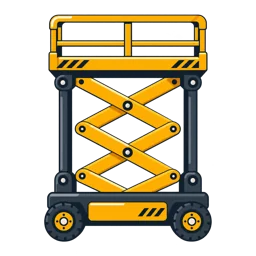
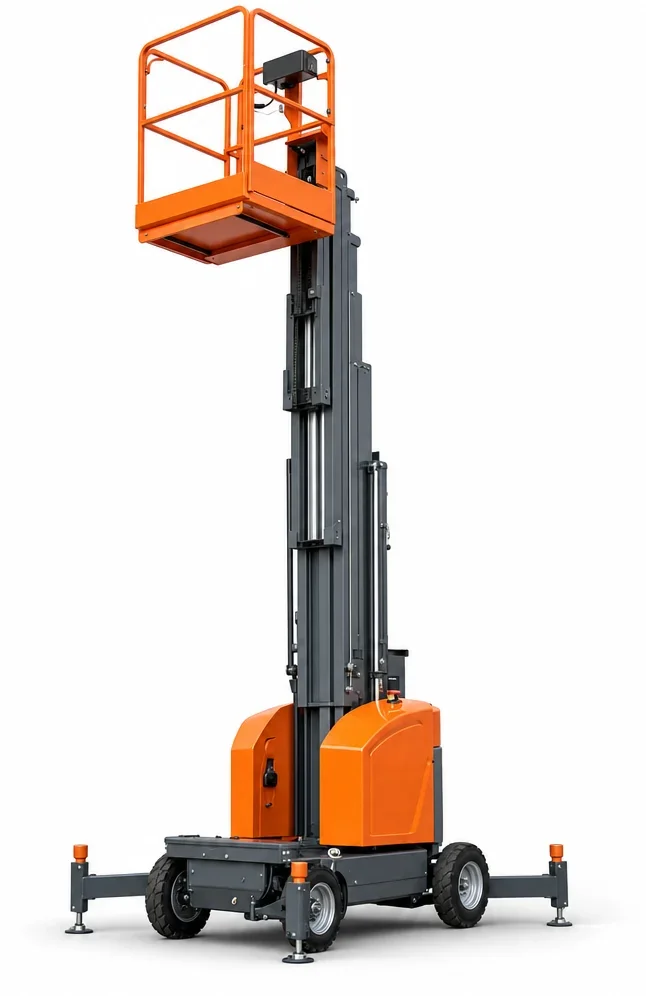
Decide by approach and outreach
If the platform can sit directly below the task without needing to reach over obstacles, a mast lift is usually the most compact elevated option. Where ducts, beams, or parapets block the path, compare with /articulating-boom-lift-rental/ for up-and-over access, or /electric-scissor-lift-rental/ when a larger deck is needed for straight-up work.
Local interior constraints
Adaptive reuse spaces often combine new racking with legacy columns and variable slab patches. That mix rewards small footprints, non-marking tires, and low machine weight. Verify door widths between older bays and new additions, as transitions can be narrower than modern standards.
Floor sensitivity and turning space
Mast lifts concentrate weight differently than scissors. In buildings with historic slabs or mezzanine decks, machine weight and point loading by spec matter. Tight turning improves access to corners and between equipment rows common in local facilities.
When a mast lift is not the best match
- Tasks needing lateral outreach beyond the platform’s small offset
- Exterior work on uneven ground or in wind-exposed areas; see /rough-terrain-scissor-lift-rental/ or /boom-lift-rental/
- Projects requiring large tools or multiple workers; compare with /electric-scissor-lift-rental/
For broader categories and planning, visit /aerial-lift-rental/ and /products/.
Keep the comparison specific
A useful equipment discussion starts with the work height, the practical machine position, the route into the area, the floor or ground along that route, and the people, tools, or material involved. Those details clarify whether vertical access, outreach, or material placement is the real constraint.