Define the job geometry first
- Where does the power land? If the unit must sit outside and feed interior work, plan the cord path around doors, ramps, and high-bay aisles.
- Can the mast sit below the task? For lighting, note whether fixtures can stand outside a facade and throw light in, or if a tower must be placed among interior columns.
- What are the duty cycles? Intermittent interior crews draw differently than continuous pumping or night-shift exterior work.
How Milwaukee conditions affect placement
- Clay-rich subgrades on unpaved lots can pump under wheel loads after rain, affecting pad pressure for trailers and skids. Firm access is helpful where units must stay level.
- Lake-effect precipitation and wind raise the bar for mast stability and guying points on open pads and dockside yards. Actual weather, unit instructions, and site procedures govern.
- Industrial adaptive reuse often means slab-safe routes indoors but broken pavement outside. Plan transitions at dock aprons, thresholds, and utility trenches.
Narrow the generator category
- Output range: note peak vs continuous load, motor starts, and any sensitive electronics. A margin for startup surges avoids nuisance trips.
- Fuel and runtime: indoor-adjacent staging may favor longer runtime intervals to reduce refueling trips through active work zones.
- Footprint and access: measure gate widths, turning radii, and ramp grades from the street to the pad. Document any low clearances under mezzanines or pipe racks.
Narrow the light tower category
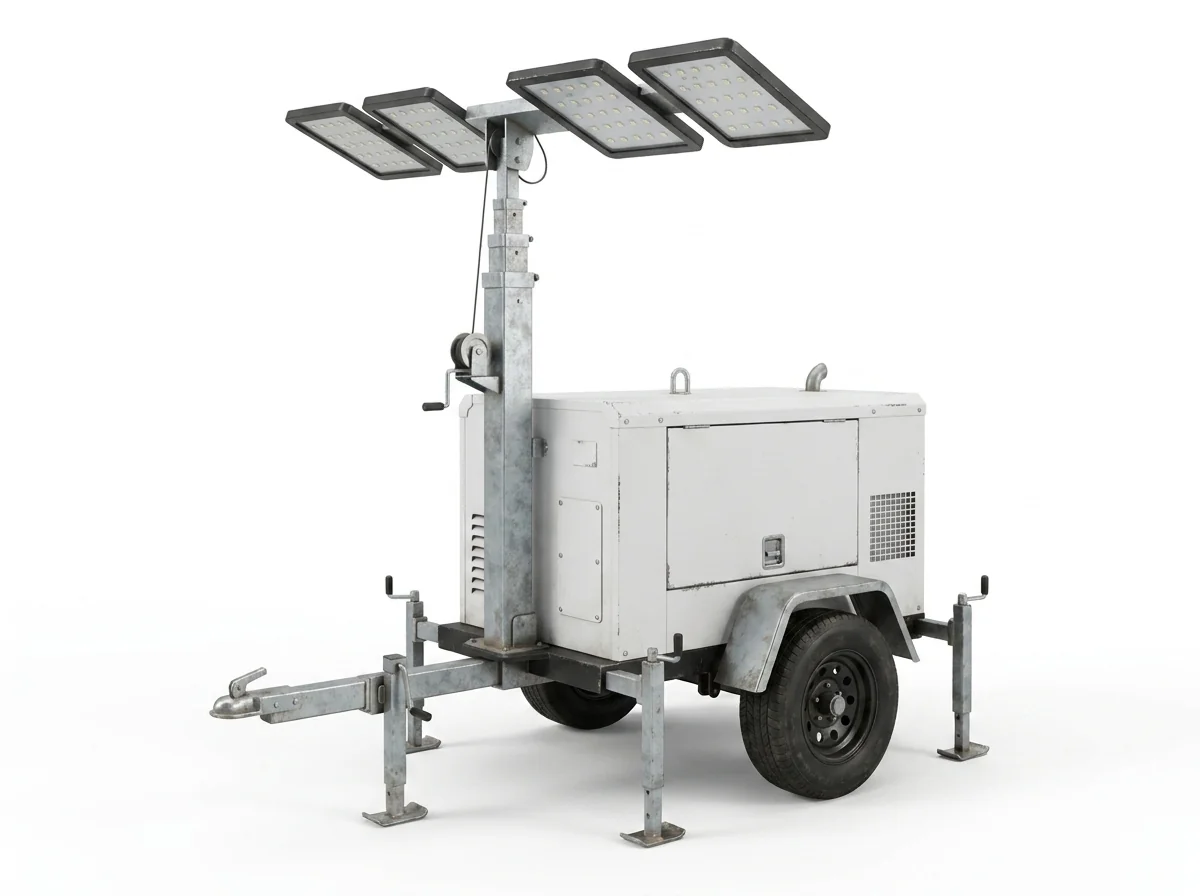
- Light throw and height: high-bay interiors in adapted manufacturing shells often need narrower beam control to avoid glare at elevated catwalks.
- Terrain rating: for exterior work near rail spurs or storage yards, rough-terrain undercarriages handle ruts and standing water better than slab-only bases.
- Power source: towers tied to a central generator reduce the number of engines on site; standalone units simplify dispersal across large lots.
Related access equipment
Lighting and power usually support work at height. If crews are working inside tall bays on smooth concrete, review /electric-scissor-lift-rental/. For exterior facade access or staging around uneven ground, compare /rough-terrain-scissor-lift-rental/ and /boom-lift-rental/ options. For outreach around setbacks or piping, see /articulating-boom-lift-rental/ and /telescopic-boom-lift-rental/.
Coordination details to capture before you call
- Delivery window constraints at active industrial sites
- Noise and emissions limits near occupied offices
- Cable protection across forklift aisles; see /forklift-rental/ if materials handling is active nearby
- Lighting spill considerations around neighboring properties
For an overview of complementary site products, visit /products/ or reach out through /contact/.