Frame the outdoor task
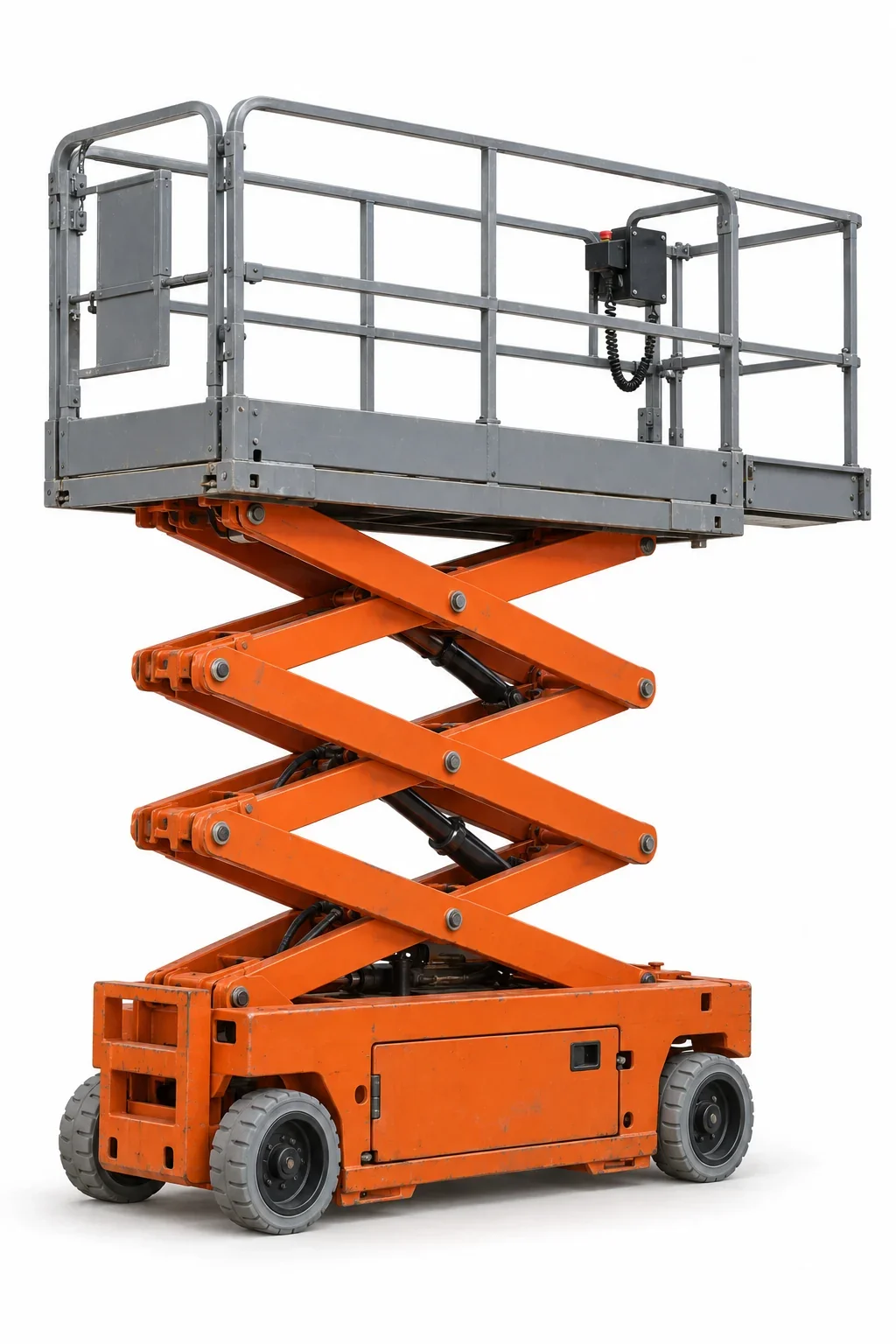
- Can the lift sit directly beneath the work face? For straight vertical access to façades, signage, and utility runs, a rough-terrain scissor is efficient.
- If the work is offset behind obstructions, consider up-and-over reach at /boom-lift-rental/.
- Define platform height and deck space for materials and tools.
Local ground and weather factors
- Clay-rich soils can swell when wet and shrink when dry, creating soft spots and surface breaks. Ground conditions influence tire performance and support.
- Lake-influenced wind can be inconsistent on open lots and near waterfront-adjacent areas. Elevated exterior work must follow the selected unit’s instructions, site wind monitoring, and procedures.
- Freeze-thaw cycles leave ruts and standing water that require ground clearance and traction not available on slab units.
Site constraints that narrow models
- Access width from street or yard gate to the work face.
- Grade changes at utility cuts, temporary ramps, and stockpiles.
- Noise limits at mixed-use properties may affect engine selection and work windows.
Common Milwaukee applications
- Exterior envelope repairs on repurposed industrial shells in active corridors.
- Yard lighting, camera poles, and perimeter utility work at commercial sites.
- Material handling at height where deck capacity and stability are priorities.
When to pivot to another platform
- Tight access with offset tasks: evaluate articulating options at /aerial-lift-rental/ or /boom-lift-rental/.
- Mixed indoor/outdoor days: pair with an interior unit at /electric-scissor-lift-rental/ to protect slabs when work moves inside.
Planning around exposure
Actual site conditions govern whether a given model is suitable. Confirm ground support in saturated areas, monitor wind at height, and coordinate staging so the machine avoids trench edges and undermined soils.