What shapes aerial equipment choices in Milwaukee
Three local factors tend to set the starting point:
- Building stock with high-bay interiors and slab-sensitive floors, especially in older manufacturing spaces now being adapted for new uses
- Lake-driven precipitation and gusty conditions along open corridors that affect outdoor stability assumptions
- Clay-heavy soils that hold water and can soften unpaved approaches to job sites
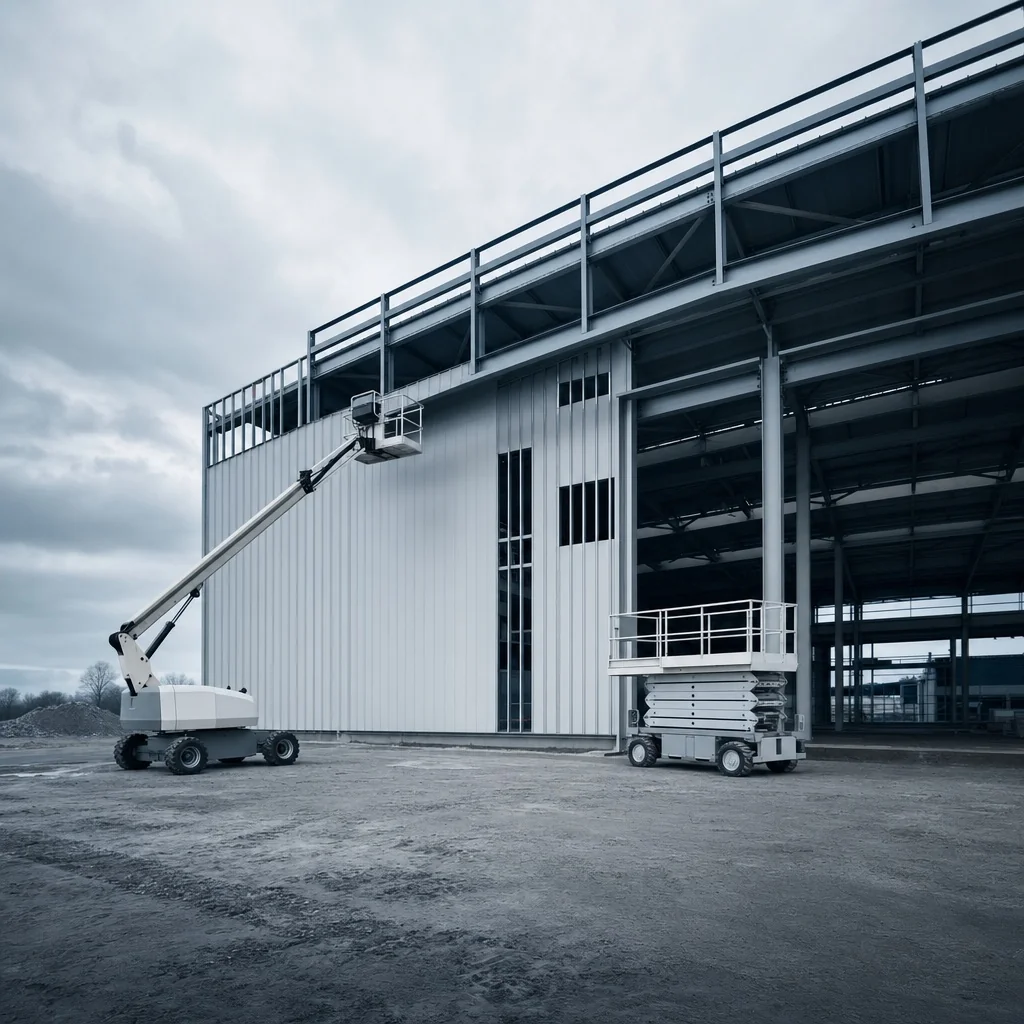
Those conditions push many projects to split their access plan: slab-safe electric scissor lifts inside, and rough-terrain platforms or booms outside where footing and wind exposure vary day to day.
How we structure comparisons
Decisions begin with geometry, then narrow by surface and exposure:
- Can the machine sit below the task and travel straight up? If yes, compare platform size and height in an electric scissor lift against the floor’s load tolerance and turning aisle.
- Is the approach uneven, wet, or on compacted fill? A rough-terrain scissor or boom lift becomes the reference point.
- Are there overhead obstacles such as trusses, conveyors, or mezzanines? Articulating booms often fit these reach paths better than straight telescoping.
Where equipment categories fit
- Interior renovation of high ceilings: slab-safe electrics or vertical mast lifts where narrow aisles and finished floors matter.
- Facade repair and roofline access on windy sites: telescopic or articulating booms with appropriate ground support assumptions.
- Material placement at height in loading courts: telehandlers paired with defined load paths.
For broader staging needs, see generators and light towers, temporary fencing, and storage containers to manage site logistics common to Milwaukee’s infill and redevelopment work.
Contact
Have a project in Milwaukee, WI and refining specs? Call (414) 441-3922 or visit Contact.